
A new route to recycled feedstock for plastics
A unique technology that converts polyolefin plastic waste directly into gaseous monomers at ambient temperature and pressure: building blocks for new, virgin-quality plastics, using a fraction of the energy of today’s chemical recycling and at much lower cost. A new recycling route to turn plastic waste into valuable feedstock.
Plastic waste as feedstock, not fuel
Polyolefins (PE and PP) make up about half of all plastics produced and roughly three quarters of household, commercial and industrial plastic waste. Yet most of it ends up incinerated or landfilled instead of being recycled.
Mechanical recycling requires clean, sorted mono-streams and cannot serve food-contact applications. Pyrolysis can, but it is energy-intensive and costly, and requires extensive pre-treatment of the plastic waste.
With the EU’s recycled-content targets (PPWR) taking effect from 2030, the industry needs a chemical recycling route that is cheaper, uses far less energy and accepts a larger share of the waste stream.
Catalytic Ball Milling: breaking polyolefins down with mechanical force, not heat
Repolyze turns plastic waste into building blocks for new polyolefins by industrialising Catalytic Ball Milling (CBM), a patented technology developed by the Mechano-Catalysis group at Utrecht University.
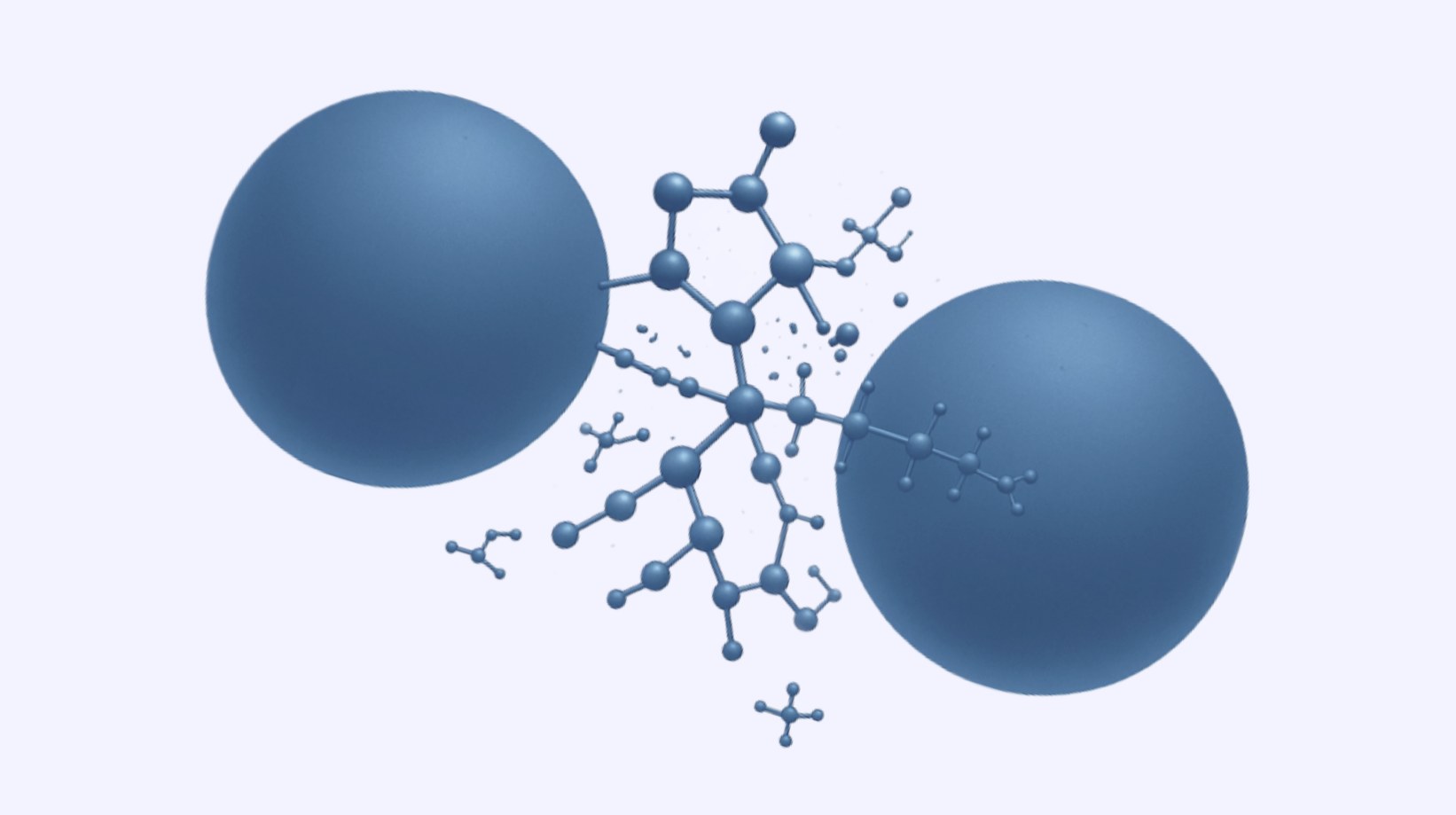
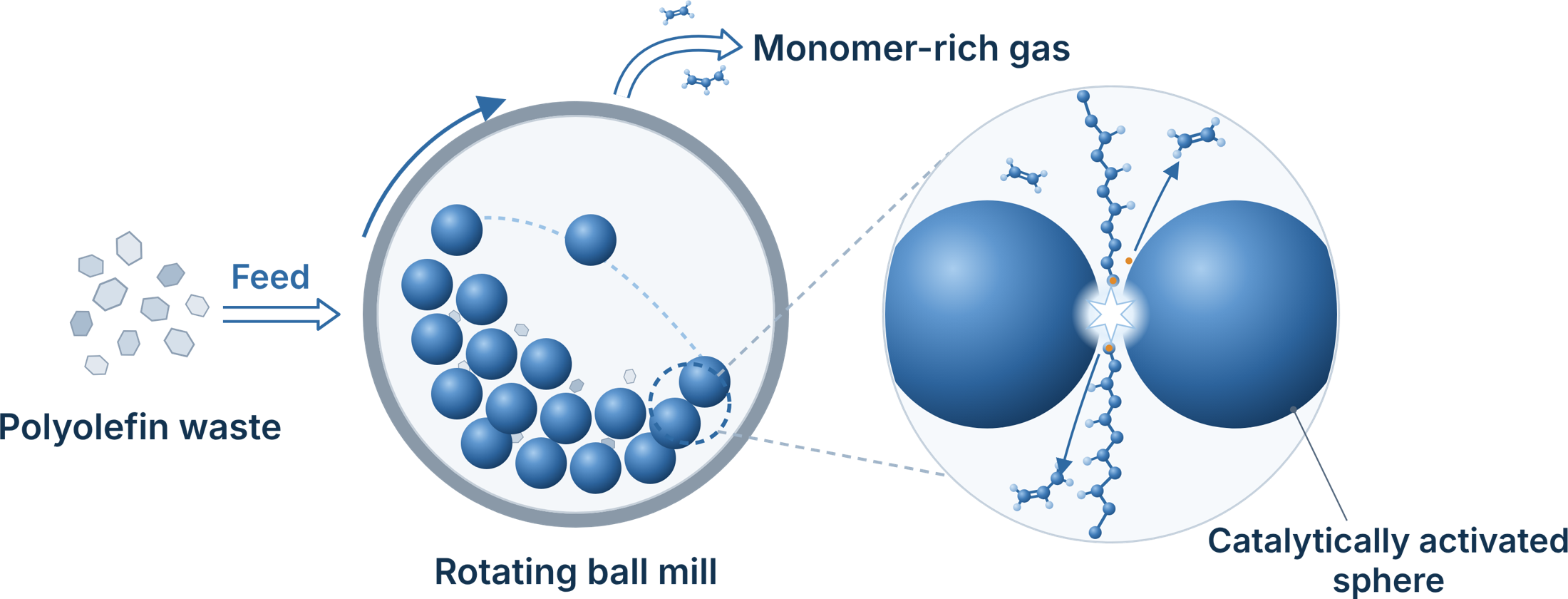
In a ball mill, colliding spheres break the polymer chains, while the catalytically activated surface of the spheres promotes further depolymerisation into olefins. In a single step, at ambient temperature and pressure, solid plastic waste becomes a gas rich in ethylene, propylene and other light hydrocarbons.
The selectivity of the catalytic process and the low temperature minimise unwanted by-products from mixed and contaminated waste, and make contaminants easier to capture. Hydrotreating and steam cracking are no longer needed: fewer process steps, lower energy use, lower capex, and suitable for a much larger share of mixed waste streams.
Low energy
No heating, no hydrotreating, no steam cracking. Energy use is targeted at less than a third of the pyrolysis route, and the process is fully electric.
Robust feedstock
Suited to mixed polyolefin waste. At low temperature fewer by-products form, and contaminants are easier to capture.
Low capex
Based on mature, scalable ball mill technology, with one conversion step replacing several process steps and units.
Step by step: from grams to tonnes per hour
Each scaling step de-risks the next: from gram scale to a kilogram-scale proof of concept, then a tonne-scale pilot, leading to a first-of-a-kind (FOAK) commercial plant. Beyond the core technology, we are developing the integrated value chain from the start: from real plastic waste streams to integration with existing purification and separation processes, delivering recycled monomers for virgin-quality polyolefins.
Repolyze was founded in 2026 as a spin-off of Utrecht University, together with venture builder BigCircle Ventures, to take Catalytic Ball Milling from the lab to industrial scale.
Join us in Repolyzing plastic recycling
Let’s close the polyolefin loop together. We are looking for partners across the value chain: waste management companies, (petro)chemical companies, EPCs and equipment suppliers. Interested? Get in touch.








Work with us
Help us take Catalytic Ball Milling from the lab to industrial scale. Discover our open positions and what it is like to work at Repolyze.